
Most engineering teams use AI one task at a time.
AI adoption in software engineering is close to universal. Most of it still runs in a straight line: prompt, wait, review, prompt again. Developers finish individual tasks faster, but they spend their day supervising one AI workflow at a time, and the amount of work one person can move barely changes.
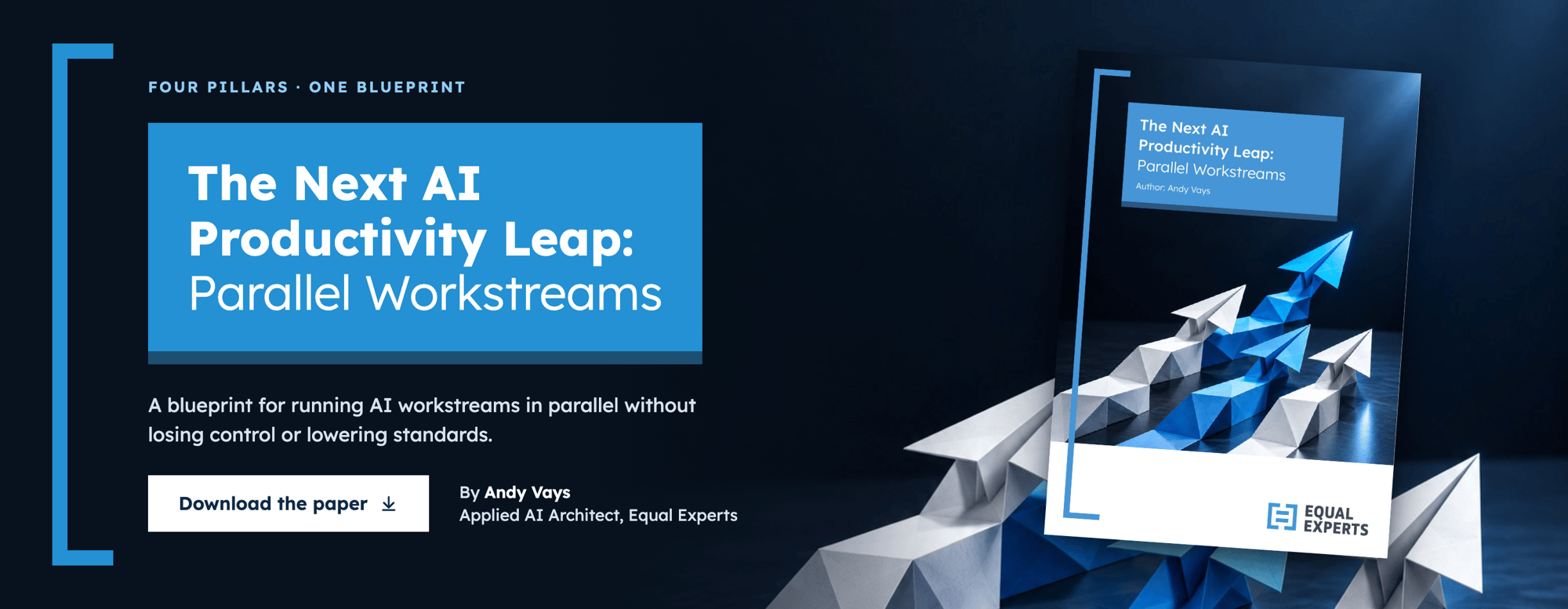
This paper sets out a blueprint for the next step. Repeatable engineering work becomes defined workflows that AI can run independently and in parallel, and engineers step in only at the checkpoints that need their judgment.
Inside, you’ll find:
- Agentic workflows: how to turn bug fixes, spec reviews and feature builds into repeatable workflows, and the five components each one needs
- Context engineering: why context gathered on the fly makes AI unpredictable, and how to treat it as a versioned engineering asset
- Executable governance: the difference between guidelines and guardrails, and how to match the control to the risk
- Ensuring flow: how to keep human review and the path to production from becoming the new bottleneck
If three workflows produce code simultaneously, then sit in a queue for a week waiting to be reviewed, you have parallelized code generation, not delivery.
Written for engineering leaders at large organizations who have rolled out AI tools and want to know why the gains aren’t compounding.
About Equal Experts
Equal Experts is a global network of 4,000+ senior consultants across five continents, helping enterprises solve complex business problems and create leading digital products and services. We decide with data, design for users, deliver at pace and scale sustainably.